+15%
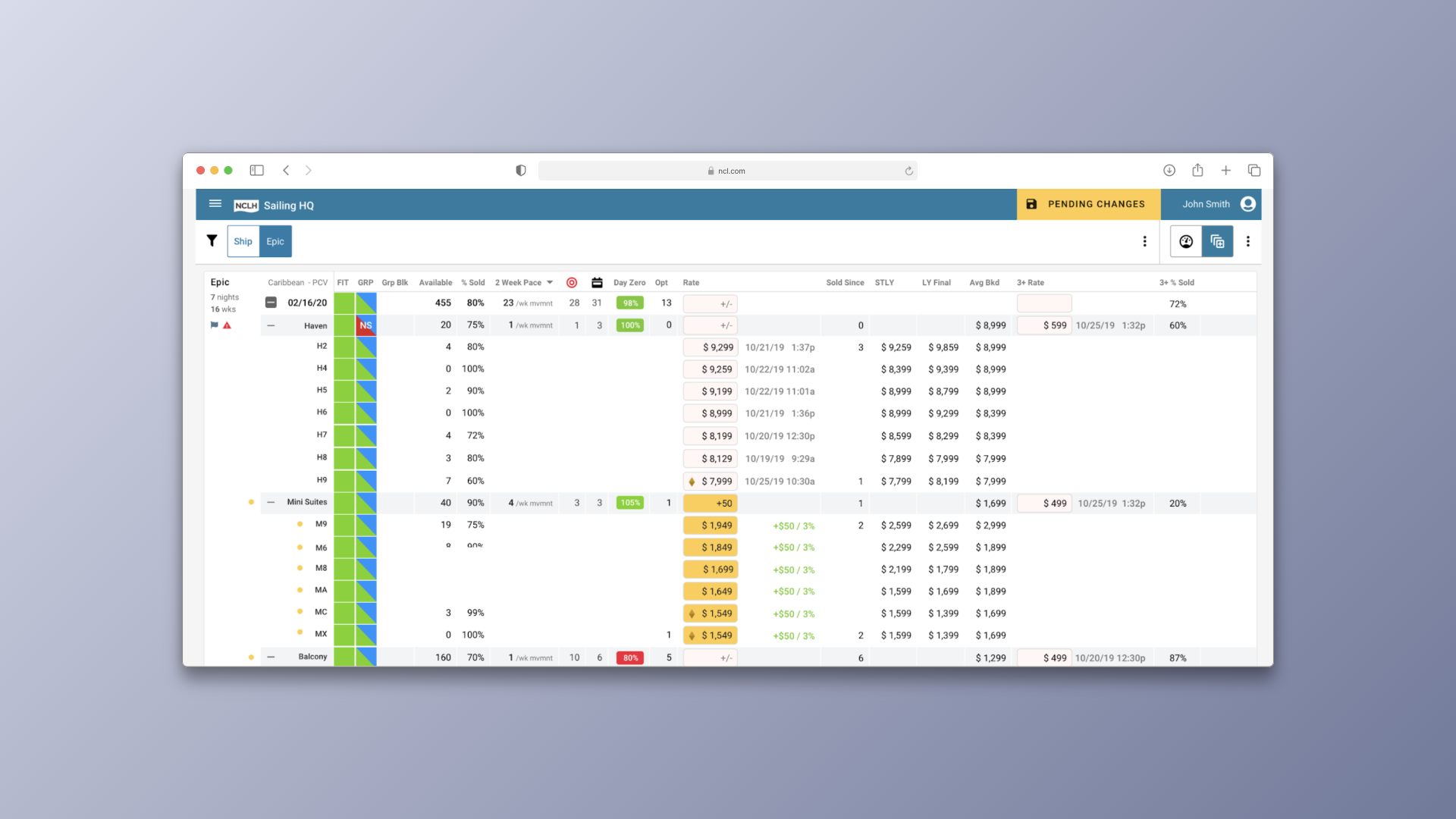
Simplified flow to support quicker pricing action.
Your Custom Text Here
Outcome + Strategy
By simplifying fragmented pricing workflows at Norwegian Cruise Lines, I reduced dashboard redundancy by 25% and made pricing decisions faster and easier to trust.
In 4 months, I redesigned workflows within tightly coupled systems—prioritizing decision clarity over raw data visibility to support real-time pricing actions.
Simplified flow to support quicker pricing action.
Reduced dashboard redundancy.
Delivered redesign within complex constraints.
Collaboration
Product manager · Lead engineer · 2 UX designers · Data analytics team
My Role
Prioritized decision clarity over raw data visibility. Aligned product, engineering, and analytics teams around shared pricing logic—not dashboard outputs. Simplified fragmented workflows to support faster, more confident pricing actions.
The Challenge
How might we streamline how tours are priced across multiple internal tools?
Pricing workflows spanned fragmented systems—leaving analysts to manually piece together decisions under time pressure.
Analysts couldn’t confidently set pricing in real time, impacting revenue decisions.
Delayed pricing decisions in time-sensitive moments.
Inconsistent pricing outcomes across analysts.
UX Research + Discovery
Analysts were reconciling conflicting pricing signals across disconnected systems in real time.
“You could get three different answers depending on which screen you looked at first.”
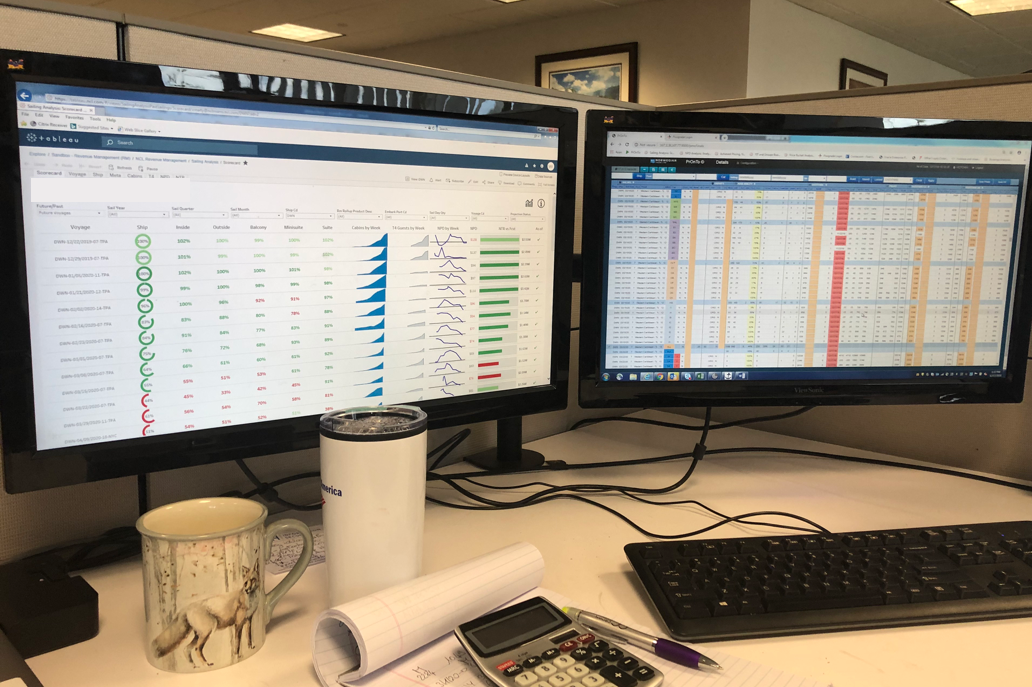
Competing tools created conflicting pricing views.
Analysts compared screens to decide what to trust.
Teams lacked a shared model for resolving conflicting pricing signals.
This shifted the work from organizing screens to modeling decisions.
Logic Diagramming
Pricing actions carried edge cases and failure states across multiple operational scenarios.
I worked with product, engineering, and analytics to map how pricing decisions should resolve before moving into interface design.
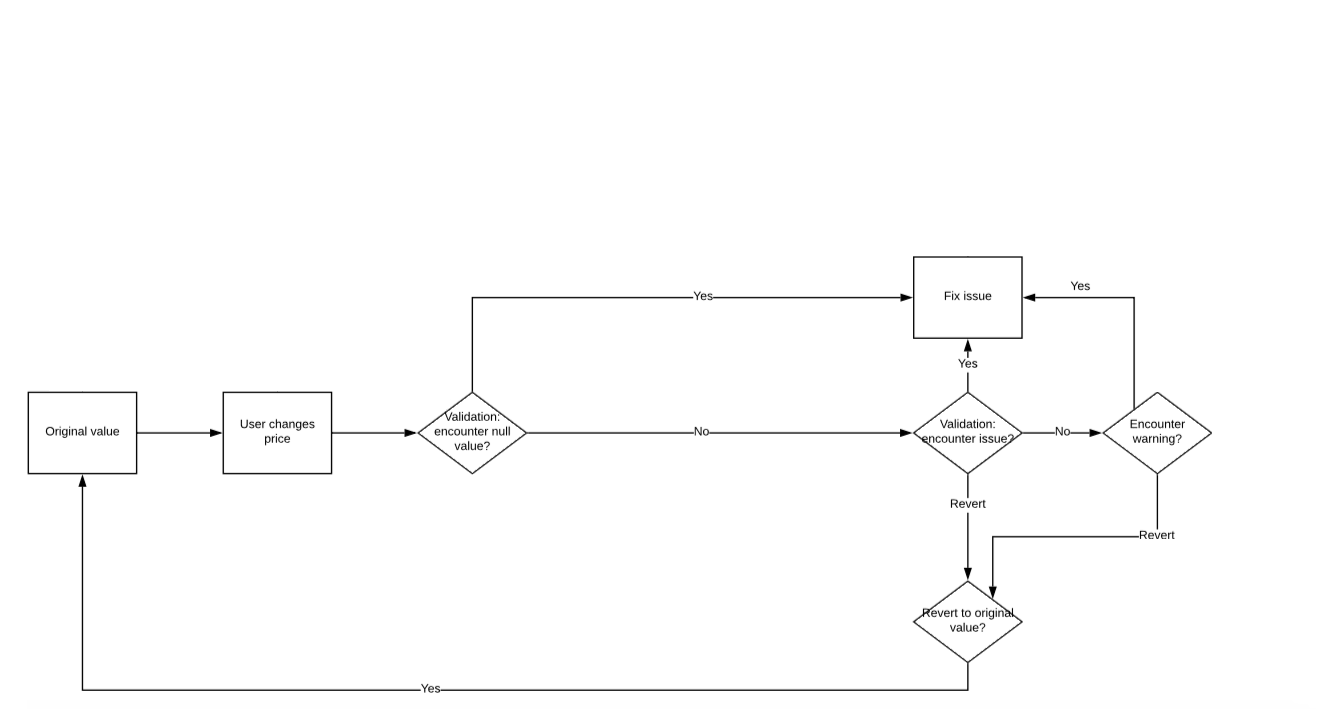
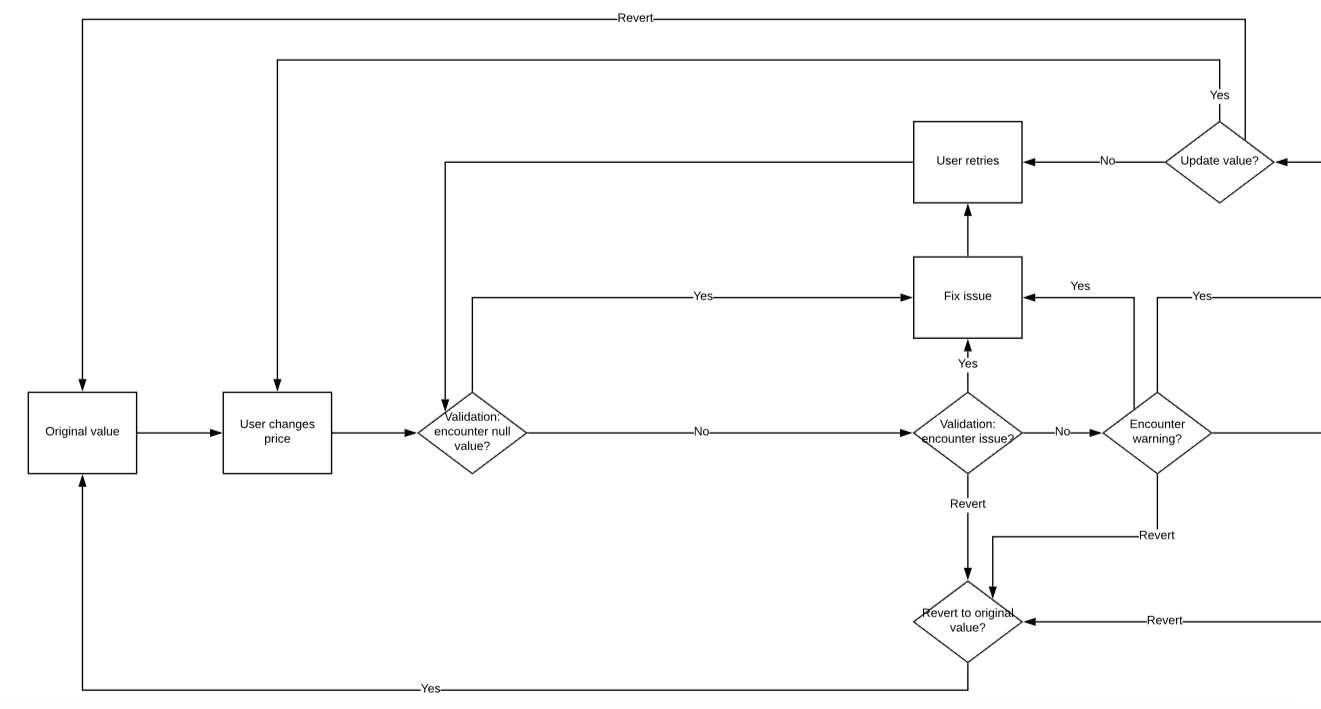
Documented pricing rules, validation paths, warnings, and failure states.
Revealed gaps between how the system worked and how teams thought it worked.
Focused on high-frequency error states over exhaustive edge cases.
Spreadsheet Prototyping
Card sorting and workflow analysis helped identify which signals analysts relied on most.
Spreadsheet prototypes were used to test hierarchy, scan patterns, and field prioritization before moving into interface design.


High-frequency signals moved into the first scan zone.
Legacy fields stayed visible to preserve analyst habits.
High-Fidelity Workflow
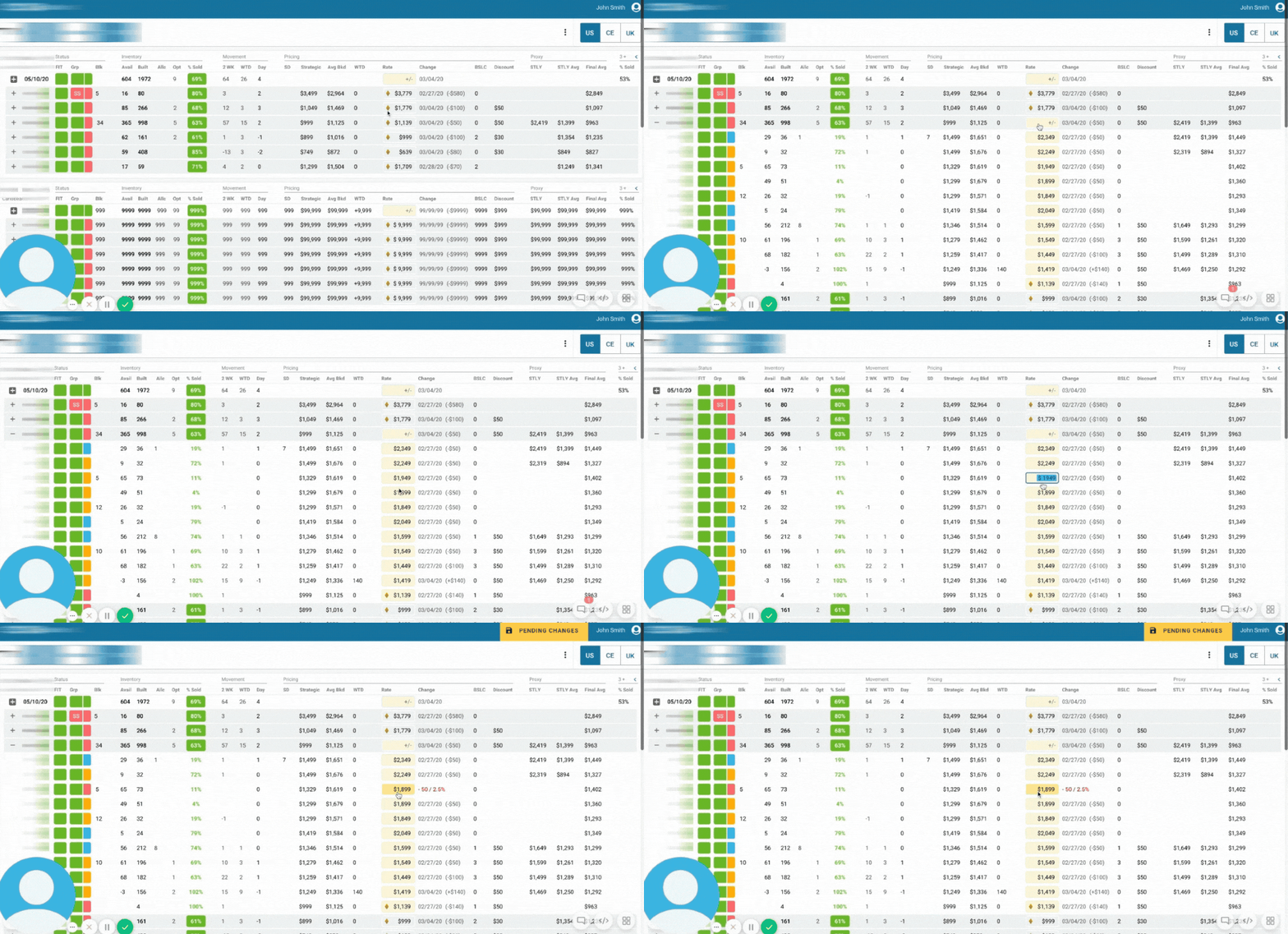
Workflow Fragmentation
Analysts stitched together pricing decisions across disconnected views.
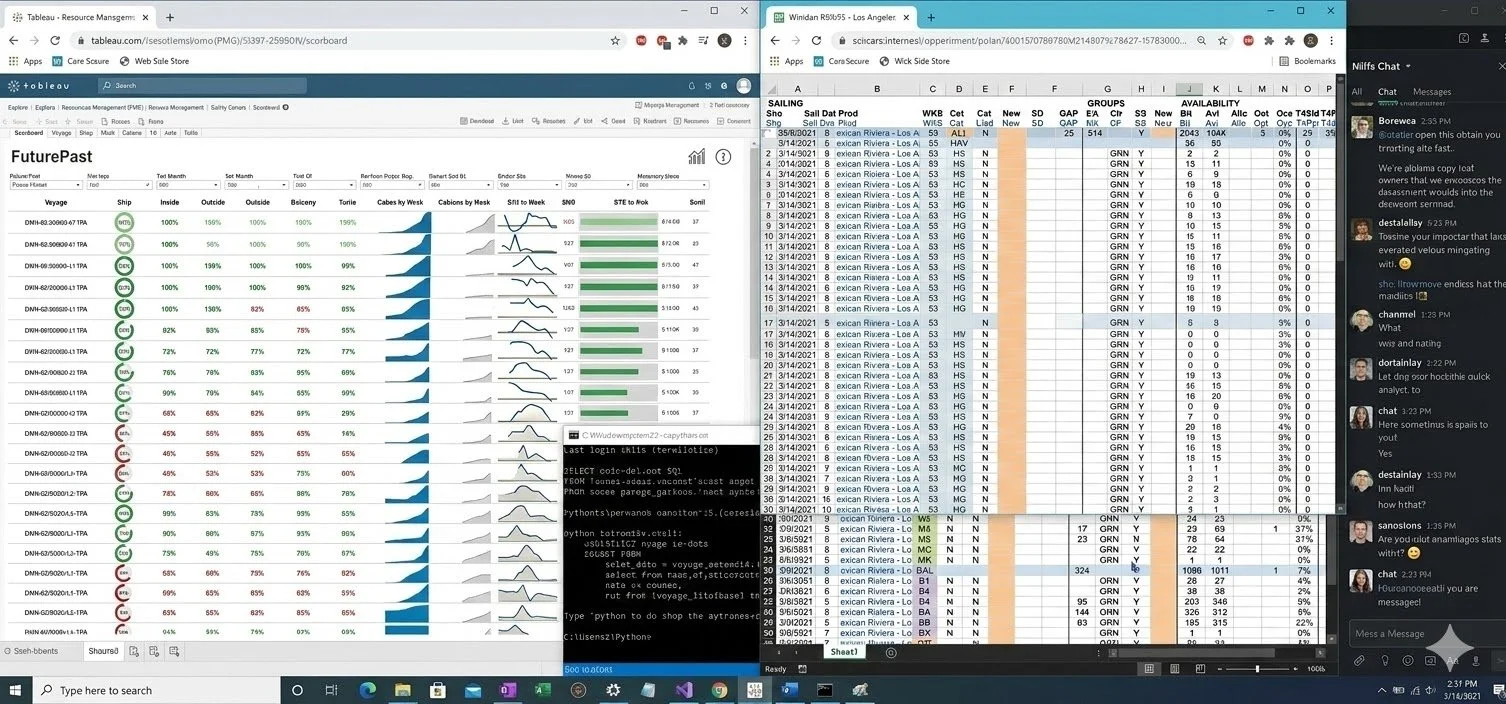
Performance, urgency, and pricing signals lived across separate workflows and spreadsheets.
Outcome
“It’s well designed and pretty intuitive. It incorporates a lot of elements we are used to.”
Analysts previously reconciled pricing signals across fragmented tools.
I redesigned the workflow, unifying high-signal inputs into one experience—making pricing decisions faster, clearer, and easier to learn.
Faster pricing decisions by reducing cross-tool reconciliation.
Analysts rated the workflow highly for supporting pricing decisions.
Easier to learn through familiar patterns and clearer signal hierarchy.
Iteration & Rollout
After validating the core workflow, we focused on tightening high-frequency pricing scenarios instead of expanding functionality.
Made 30%+ price changes easier to scan so analysts could identify high-risk pricing actions more quickly.
Added show/hide toggles to simplify nested package relationships without increasing interface complexity.
Deferred EU pricing adjustments until the primary pricing workflow proved reliable under real operational use.
Reflection
Building the workflow clarified which pricing behaviors mattered most—and which operational assumptions needed to evolve.
Reducing scan complexity mattered more than exposing every available signal.
Workflow diagrams helped teams align before implementation decisions became expensive.
Focusing earlier on repeated analyst behaviors would have reduced downstream feature churn.
Co-defining technical and operational constraints upfront improved later roadmap decisions.
mels.lau@gmail.com
832.671.2852